Commodity trading is no longer just about buying low and selling high. For physical commodity businesses, every deal carries a chain of moving parts: contracts, cargoes, pricing formulas, delivery windows, storage, quality specifications, operational costs, invoices, payments, and market exposure.
When these moving parts are managed in spreadsheets, emails, and disconnected systems, decision-making becomes slow and risky. A trader may know the deal was booked. Operations may know the cargo has moved. Finance may know the invoice is delayed. But management often sees the full picture too late.
This is where CTRM software changes the game.
A Commodity Trading and Risk Management system gives trading companies one structured platform to manage trade intelligence across the full lifecycle. Instead of treating each deal as a static record, a CTRM connects the commercial, operational, financial, and risk-related data behind every transaction.
From Trade Capture to Trade Intelligence
Traditional trade capture records the basics: counterparty, commodity, quantity, price, and delivery period. That is useful, but it is not enough.
Trade intelligence starts when the system connects that captured trade to everything that happens afterward. If a vessel arrives late, the pricing window may change. If quality results fall outside specification, penalties may apply. If costs increase during transport, profit margins change. If payment is delayed, cash flow is affected.
A strong CTRM solution helps companies see these changes before they become expensive surprises.
For commodity businesses managing multiple cargoes, storage locations, and delivery schedules, this visibility is critical. What looks profitable at trade entry can become risky by settlement if costs, pricing, exposure, and operations are not tracked together.
Why Commodity Traders Need Connected Visibility
In physical commodity trading, every cargo has its own timeline. Each movement affects inventory. Each delay can affect demurrage, pricing, cash flow, and customer commitments. Without a centralized view, teams waste time reconciling information instead of making decisions.
A CTRM platform helps trading teams answer practical questions faster:
Where is the cargo now?
What is our current position?
Which trades are exposed to price movement?
Are operational costs damaging the margin?
Which invoices are due?
Which counterparties create credit risk?
These are not just reporting questions. They are management questions. The faster a company can answer them, the better it can protect margin and reduce risk.
Better Decisions Through Connected Data
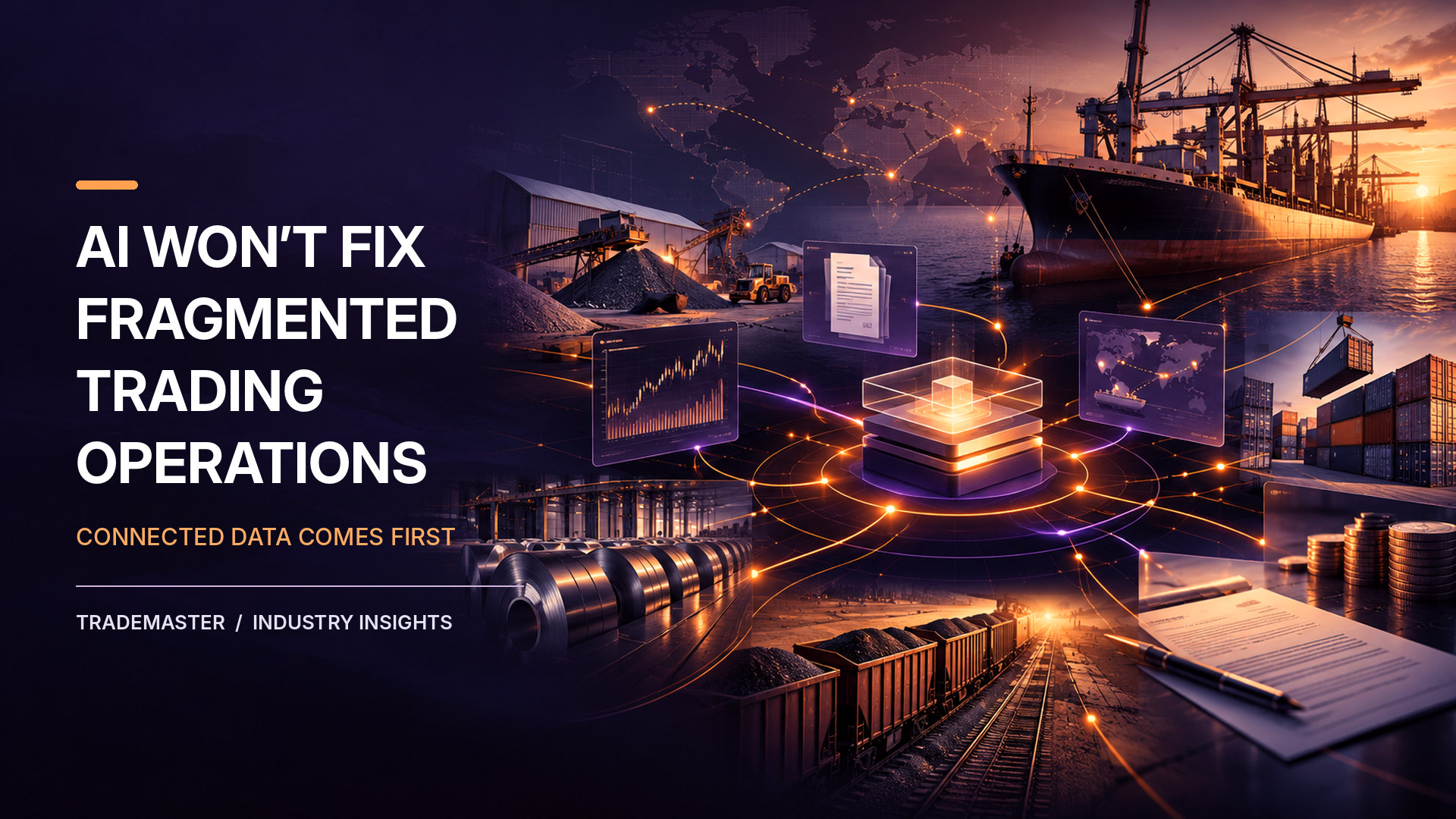
The real value of CTRM software is not just automation. It is connected intelligence.
When trade data, market pricing, cargo movement, cost capture, and cash flow are managed in one platform, decision-makers get a more reliable view of the business. Traders can act on accurate positions. Risk teams can monitor exposure. Operations teams can track movements. Finance teams can forecast cash flow with fewer blind spots.
For growing commodity trading firms, this creates a major advantage. It reduces dependence on manual spreadsheets, improves visibility across departments, and gives management a clearer understanding of performance.
How TradeMaster Supports Smarter Commodity Trading
TradeMaster is designed to support commodity trading teams that need better control over trade capture, operational movement, pricing, cost tracking, cash flow, and risk visibility.
Instead of leaving each department to manage its own version of the truth, TradeMaster helps create a connected view of the trading lifecycle. This gives companies the foundation they need to move from reactive reporting to proactive decision-making.
In a volatile commodity market, speed matters. But speed without visibility is dangerous.
CTRM software improves trade intelligence because it helps companies see what is happening, understand what it means, and act before small issues become costly losses.
For commodity trading businesses managing complex physical deals, cargo movements, and financial exposure, that is not just software value. It is commercial survival.